Renewable energy resources
This section explores renewable energy sources, highlighting their essential role in sustainable development. Renewable energy derives from resources that replenish naturally, including solar, wind, biomass, biogas, geothermal, and hydrothermal sources. Key applications range from electricity generation (via solar panels, wind turbines, and hydropower) to heating and fuel alternatives for transportation. Advantages of renewables include environmental benefits, job creation, energy independence, and reduced greenhouse gas emissions. However, challenges such as intermittent availability, lower efficiency, high initial costs, and large space requirements present obstacles. Overall, renewable energy is crucial for mitigating climate change and enhancing energy security and economic growth.
Renewable energy resources
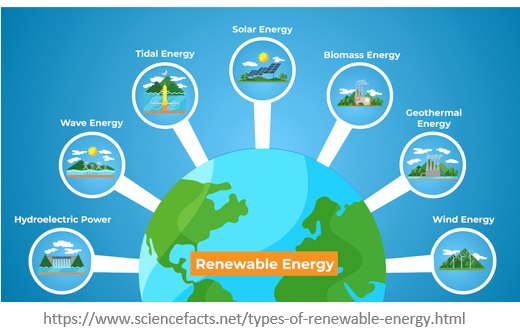
Energy sources are those whose use is not associated with long-term deficit, because their resources are renewed in a relatively short time (renewable raw materials). Such sources are: sun, wind, biomass, biogas, and biofuels. Renewable energy also includes heat obtained from the ground (geothermal energy), air (aerothermal energy), and water (hydrothermal energy). Renewable energy plays a vital role for saving the environment.
Hamed, T. A., and A. J. J. O. S. D. O. E. Alshare. 2022. Water, and E. Systems, environmental impact of solar and wind energy-a review. Journal of Sustainable Development of Energy, Water and Environment Systems 10 (2):1–23. doi:10.13044/j.sdewes.d9.0387.
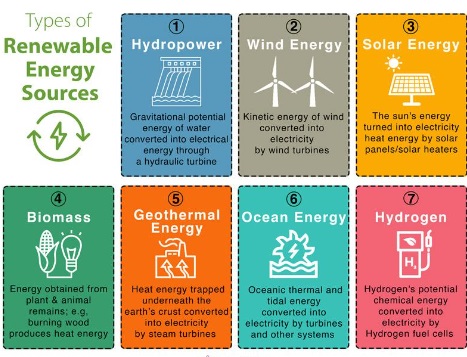
Source: https://www.sciencefacts.net/types-of-renewable-energy.html
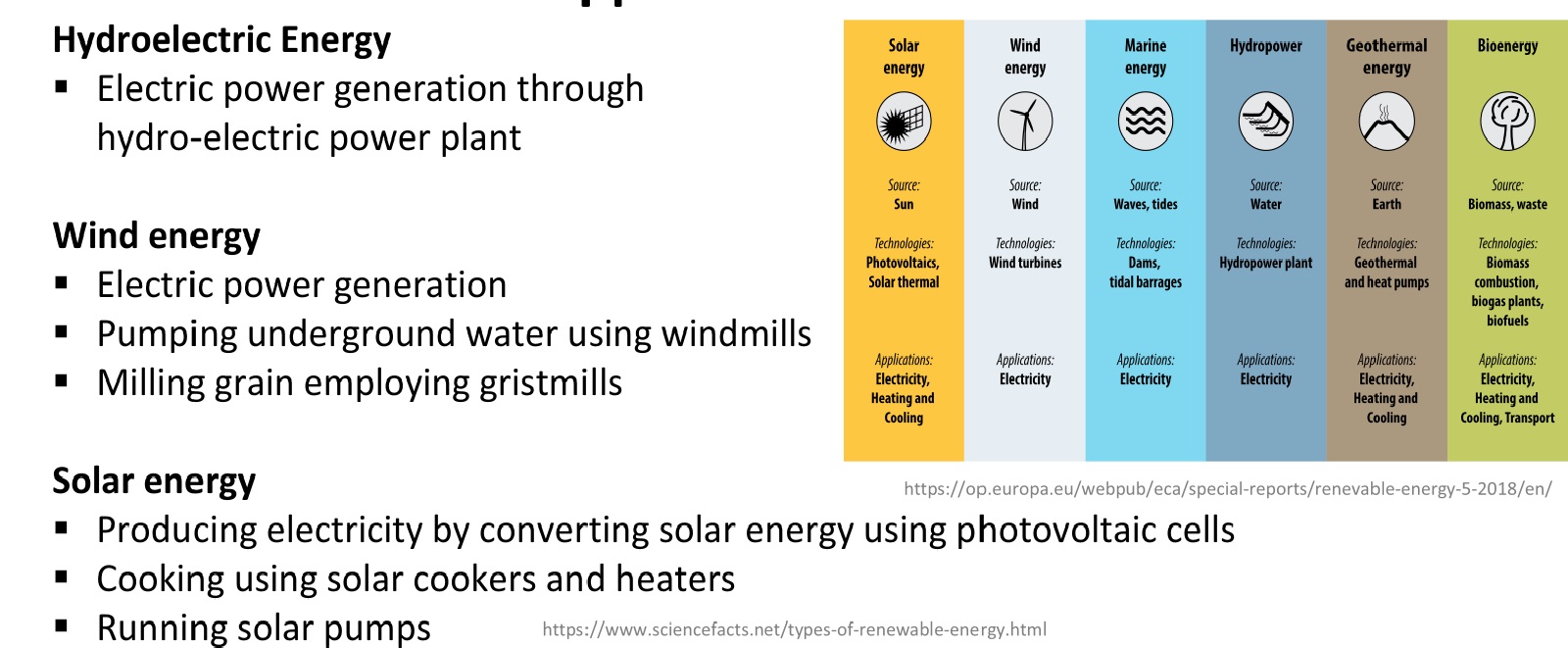
Applications
Hydroelectric Energy
-
Electric power generation through
hydro-electric power plant
Wind energy
-
Electric power generation
-
Pumping underground water using windmills
-
Milling grain employing gristmills
Solar energy
-
Producing electricity by converting solar energy using photovoltaic cells
-
Cooking using solar cookers and heaters
-
Running solar pumps
Biomass
-
Production of biodiesel and alcohol to be used as a
replacement for traditional automobile fuels -
Producing methane gas that can be used to generate
heat, electricity, and organic chemicals
Geothermal Energy and ocean energy
-
Electricity generation
Hydrogen Fuel Cells
-
Hydrogen fuel cells can be used to drive automobiles instead of petrol or diesel engines
Advantages of renewable energy sources
-
Renewable energy sources will not run out
-
Renewable energy is reliable
-
Renewable energy is environmentally friendly
-
Renewable energy can increase public health
-
Renewable technologies create lots of jobs
-
Renewable technologies require less maintenance cost
-
Renewable energy can reduce turmoil in energy prices
-
Renewable energy can increase countries’ economic independence
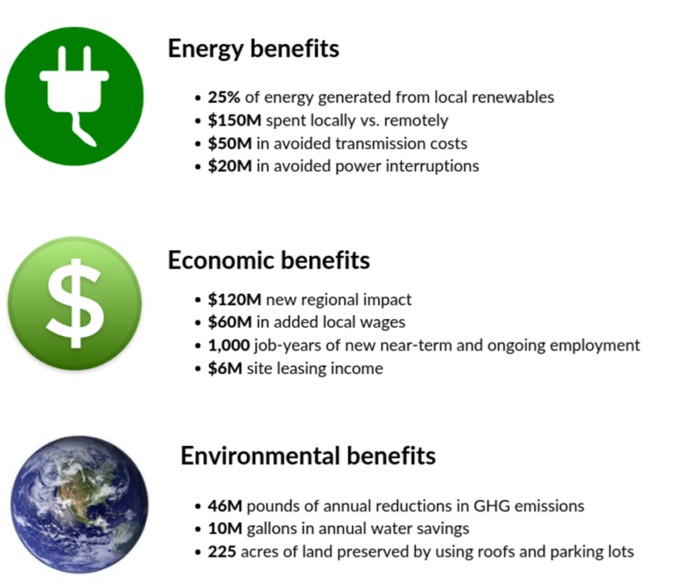
https://clean-coalition.org/value-of-clean-local-energy/benefits/
Disadvantages of renewable energy sources
-
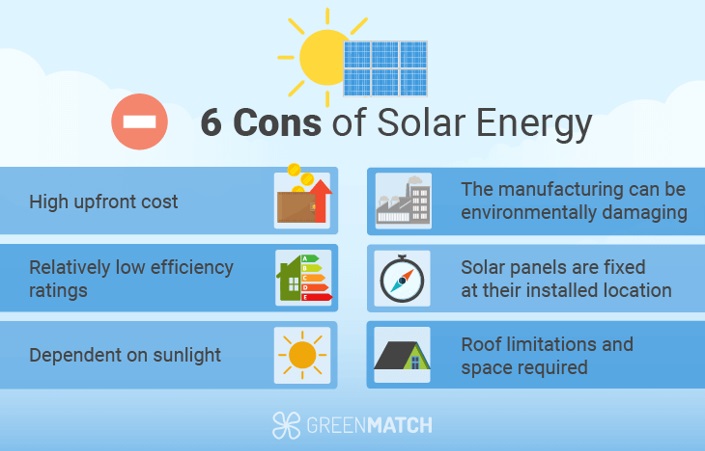
Intermittent availability - renewable energy can be inconsistent due to weather, requiring fallbacks to traditional power.
-
Lower efficiency - renewable technologies have lower efficiency rates compared to fossil fuel-based methods.
-
High initial costs - the upfront cost of renewable technologies and their installation is often steep.
-
Space requirements - renewable energy farms demand large land areas, more so than traditional power stations.
-
Recycling challenges - while cleaner, renewable devices can be pollutive at disposal and require
https://www.greenmatch.co.uk/blog/2021/09/advantages-and-disadvantages-of-renewable-energy
https://www.greenmatch.co.uk/blog/2014/08/5-advantages-and-5-disadvantages-of-solar-energy
The significance of renewable energy
-
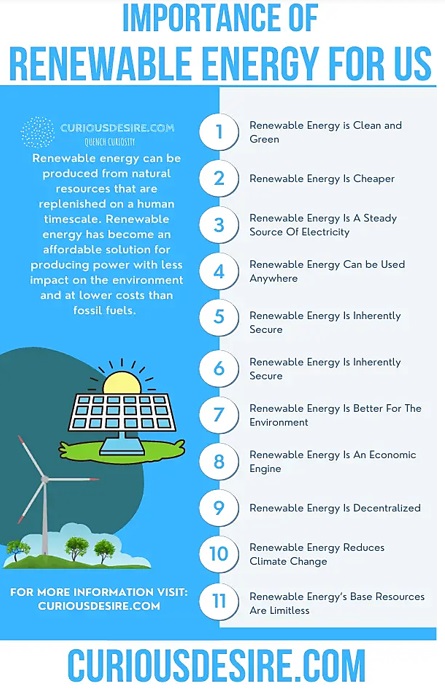
Halting global warming: Burning fossil fuels releases significant amounts of carbon dioxide, exacerbating global warming. Renewable energies offer an affordable, plentiful, and never-ending supply that doesn't emit greenhouse gases, making them key to curbing global warming and ensuing climate alterations.
-
Strengthening fuel supply stability: With fluctuating energy markets and geopolitical instabilities, ensuring a stable fuel supply is a global priority. Utilizing indigenous renewable resources can help nations meet their energy needs more reliably.
-
Economic and employment advancements: Investing in renewable energy infrastructure can spur economic growth and generate new employment prospects, particularly for the younger generation.
https://curiousdesire.com/reasons-why-renewable-energy-is-important/