MOOC - Food Education
Section outline
-
-
Due: Tuesday, 15 October 2024, 5:18 AM
Subscribe to the Forum - You can post new topics or participate in the discussion
Welcome to our interactive forum! As educators, we have a unique opportunity to inspire our students to think critically about sustainable food systems and take action in their communities. This forum is designed for us to share and brainstorm project ideas that we can implement in our classrooms to engage students in hands-on, meaningful learning experiences about sustainable food systems.
-
How to navigate this module.
The best way to follow this module is in a linear sequence.
You can open each lesson and follow it page by page. If you prefer to browse any lesson you can navigate it using the left sidebar with the course index.
Just click on the desired lesson or resource.
After you read the description of the lesson you can click on that link to open it and follow the instructions.
This Module will provide you with a better understanding of the foundations for integrating education for Food Systems sustainability and Futures Literacy.
The course will offer you support to deliver innovative curricula, achieve continuous professional development and improve your capacity as educator for a sustainable future.
-
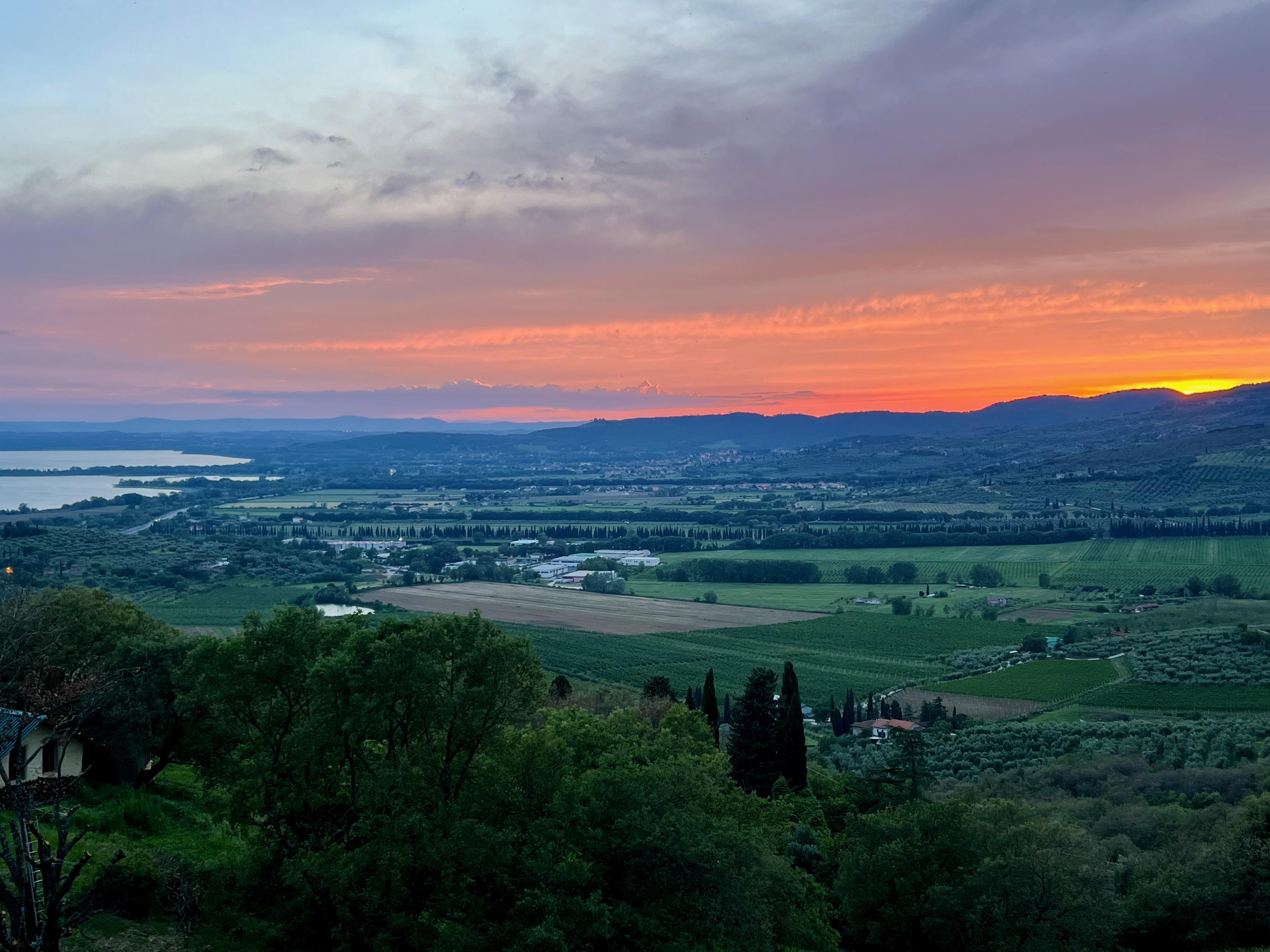
La Buona Terra - Italy.
-
Here is a definition and an overview of Food Systems.
Click the Introduction to Food Systems link to see a definition and the components of Food Systems
-
Open this brief description of the impact of food systems in the world before you attempt to answer the quiz.
Click on Impact of Food Systems in the world
-
Let's think about our impact. Complete this Multiple choice quiz. You won't be marked on it and it does not affect the completion of the module.
Click on the link to start the quiz
-
Food Systems can be simple or complex. You can use this content as a generator for discussions in class or as a project based learning activity researching your local reality or mapping your local food system with your students.
Here you can see a complex mind map of some food systems with some of the topics to explore with your students.
-
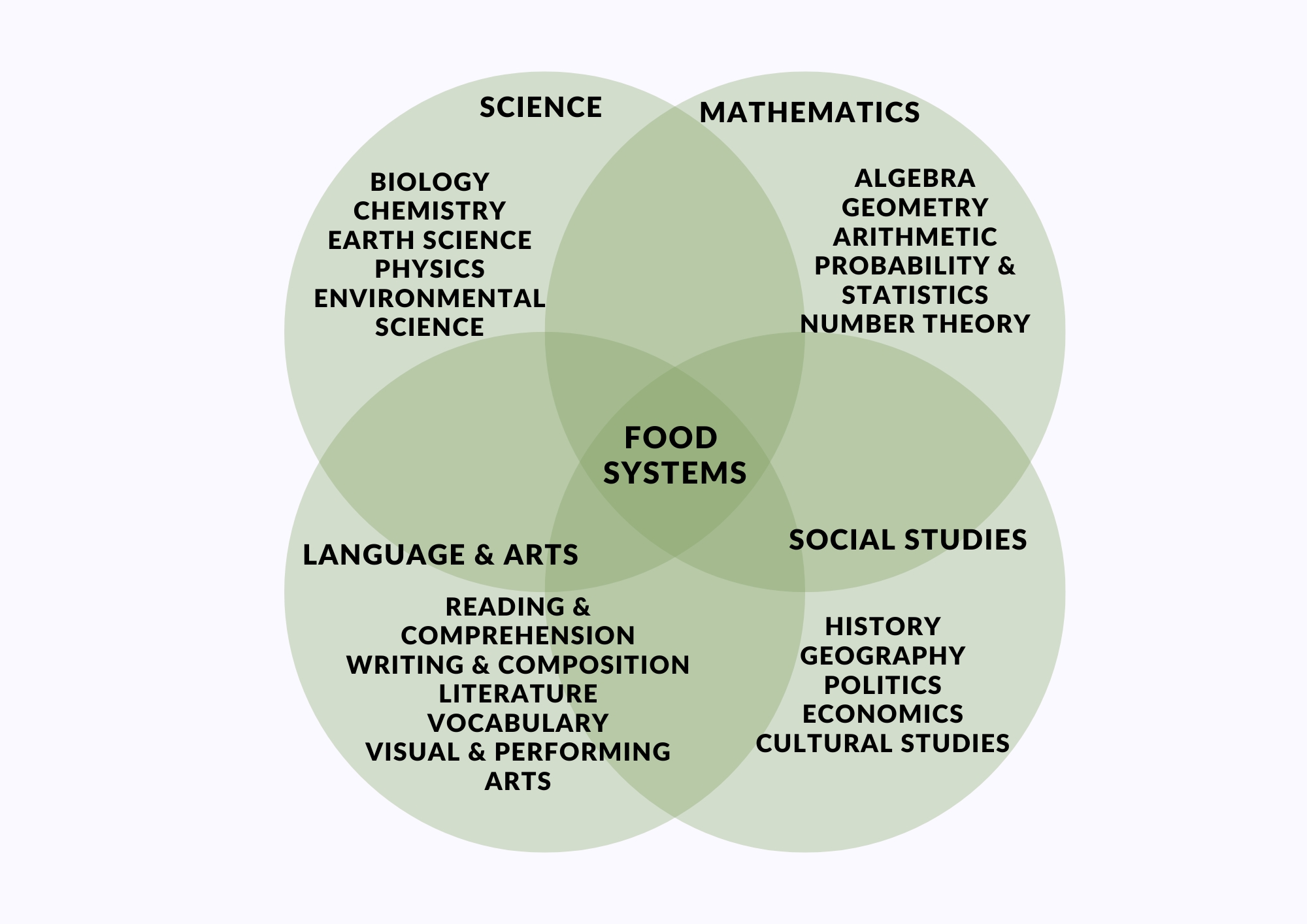
YOU CAN TEACH ABOUT FOOD SYSTEMS
IN ANY DISCIPLINE.
THERE ARE MANY TOPICS AND OPPORTUNITIES
TO INCLUDE FOOD SYSTEMS IN YOUR CLASS PLANS
-
True or False
Complete this quiz to refine your understanding of food choices.
-
Click on Food Environments to see a brief overview of the concept with a link to an example on another website.
-
-
-
This is a simple class plan to introduce soils to middle school students. Includes a tip sheet.
-
Objective:The objective of this activity is to engage participants in imagining and designing sustainable food systems for the future by using scenario analysis. This exercise will help develop futures literacy capabilities, allowing you to think critically about potential futures and the steps needed to achieve sustainable food systems.
Open Futures Literacy to see the activity
Download the Script below for the activity to apply it with your group.
-
This file contains a script to run the activity in class and steps to apply it online in the Moodle environment.
-
Examples of Project Based Learning (PBL) activities for your class.
-
More activities here.
This document lists an important reference and gives you some examples of Project Based Learning activities that you can apply.
-
Here is a website with lots of resources and information on how to introduce sustainability education and food systems in the school and home environment.
-
Here you will find more information and case studies supporting:
-
Critical Thinking: question and analyse the impact of your food choices on the environment and society.
-
Motivating Action: student-led initiatives that make a positive impact on their communities.
-
-
In this folder you will find more references and files to support your work with Sustainable Food Systems.
-
The Food Systems Dashboard is a critical resource and can be used to analyse food systems.
-
-
Books, publications, websites, articles for you to continue your exploration of Sustainable Food Systems in Education
-
-
Ready to get dirty?
We're going down into the soil
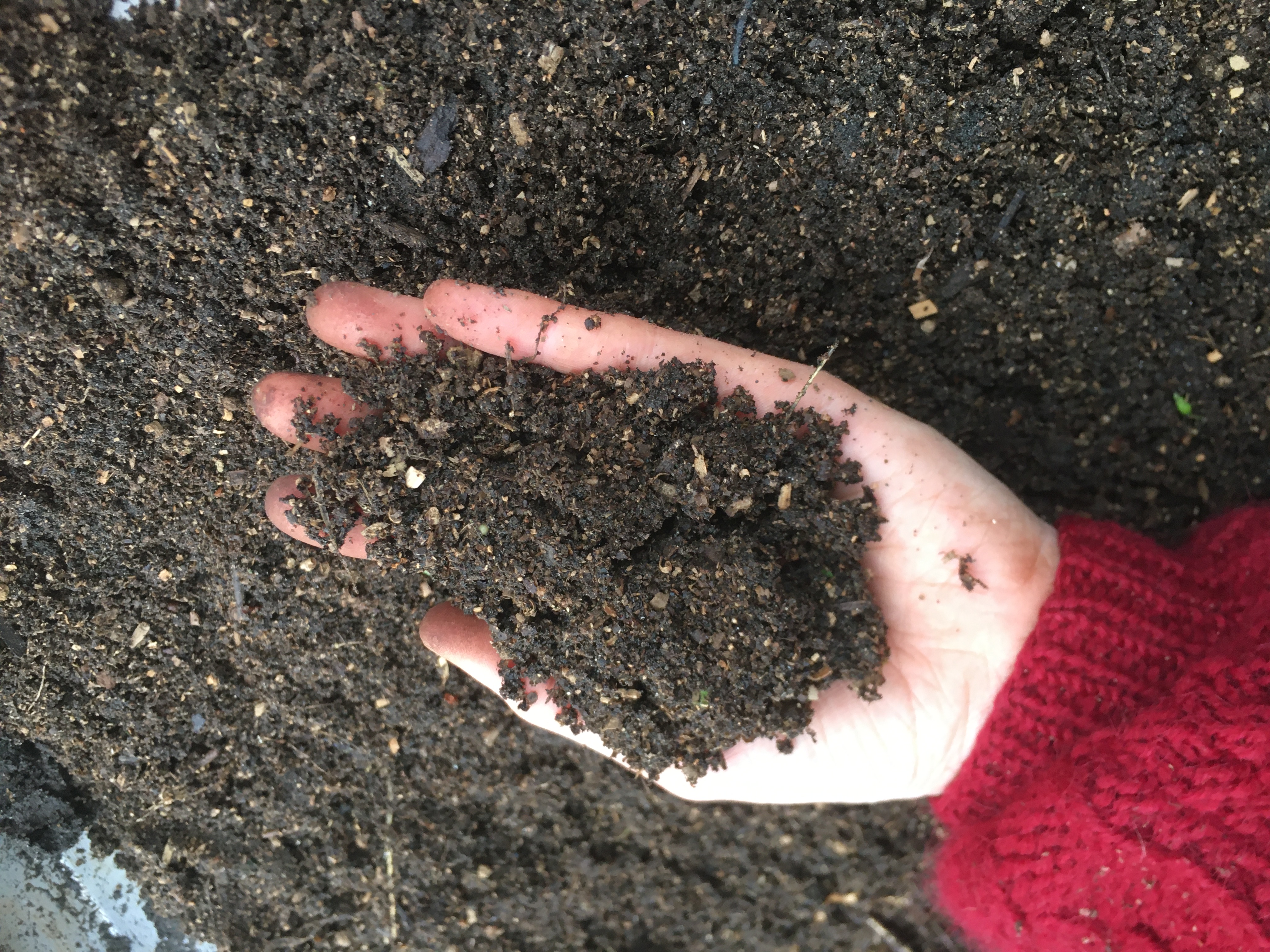
Here you can learn all about soil! You'll also learn techniques that can be used to save soil that has been misused. Soil health is often overseen when it comes to sustainability issues, but it is one of the biggest problems! You can start by watching the first video about healthy soil and then proceed to checking out some other materials or dive into a quiz.
We recommend following the chronological order suggested here in the list on the left, but you can also hop straight to the topics that interest you the most at each time.
-
Opened: Monday, 4 November 2024, 6:35 PMStudents mustReceive a gradeReceive a passing grade
-
Opened: Tuesday, 5 November 2024, 6:39 PMStudents mustReceive a gradeReceive a passing grade
-
-
-
-
Students mustMark as done
In this section you can find the important terms for educational assessment and evaluation.
-
Subscribe to the Forum - You can post your activity, add new topics or participate in the discussion
Welcome to our interactive forum! This forum is designed for us to share and brainstorm project ideas, propose assessment tools, reflect on our techniques of assessment, and finally post our activity for feedback!
-
Students mustMark as done
In this section you will be able to see the schematic representation of educational assessment, and understand its importance.
-
Students mustMark as done
In this chapter you can find 3 distinct groups of educational assessment, based on the learning process, evaluation group and the learning outcome.
-
Students mustMark as done
Lists of different assessment tools, divided in traditional and alternative methods.
-
Students mustMark as done
In this chapter you will be able to learn about the different types of rubrics, along with specific examples.
-
Students mustMark as done
The present chapter showcase the elements that need to be taken into consideration for a successful Analytic Rubrics development.
-
Students mustMark as done
This chapter introduces the European GreenComp framework for assessing sustainability competencies and provide support of how to evaluate students' sustainability skills effectively.
-
Students mustMark as done
You are a teacher of a class of 12 year old students, teaching geography. You have the overview of implementing a project with the title "from farm to table", that would last for 4 weeks in total. The educational programme is designed in a way that promotes student-based learning about sustainable farming and nutrition. It promises to cultivate 4 competencies to students: knowledge of ecological production, collaboration, active citizenship, and futures literacy. You are asked to design a rubric that can be used to assess at least 2 out of those competencies.
Download the document, and work locally.
You can work with the document as many times as you feel like.
Upload your document to the forum and ask from other people in the course to give you feedback.
-