Sustainable transportation
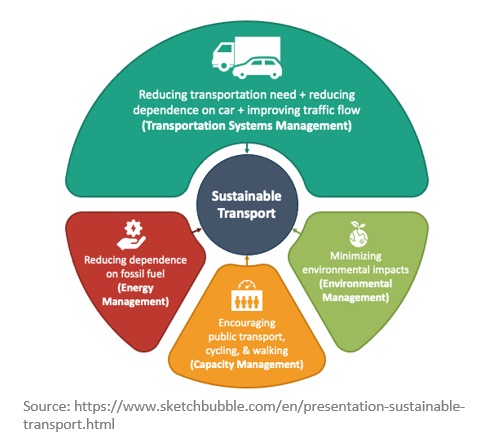
This section discusses sustainable transportation options and low-emission strategies for agriculture. Sustainable transport methods, such as electric vehicles, hydrogen fuel cells, and biofuel options, offer benefits like reduced emissions, fuel savings, job creation, and improved energy security. In agriculture, sustainable practices include carbon farming, which enhances carbon capture in biomass and soil, and reducing meat production and monoculture practices to decrease environmental harm. Agroforestry, combining trees with crops or pasture, supports soil health, biodiversity, and economic resilience, representing a critical component for sustainable land management and climate adaptation
Sustainable transportation and Low emission strategies for agricultural practices
Emissions from different types of transport
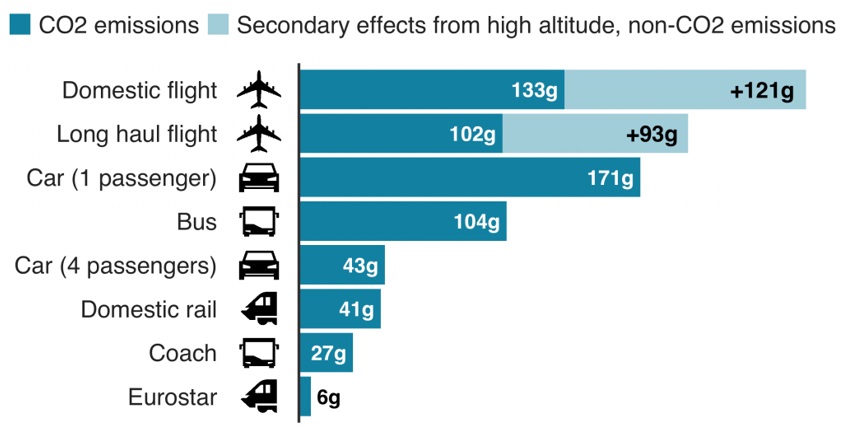
https://www.sherbetlondon.com/news-blog/how-our-travel-footprint-affects-the-environment-in-2020/
Types of Sustainable Transport
-
Electric Vehicles (EVs)
-
Hydrogen Fuel Cell Vehicles
-
Biofuel Vehicles
-
Compressed Natural Gas (CNG) Vehicles
-
Solar-Powered Vehicles
-
Human-Powered Vehicles
-
Electric-Assist Vehicles

The benefits of sustainable transportation include:
-
Cost savings on fuel and vehicles
-
Reduced carbon emissions from burning fossil fuels, resulting in less air pollution
-
Job creation with increased vehicle and battery manufacturing and fuel production
-
Improved accessibility to reliable, affordable transportation options
-
Enhanced energy security and independence with less reliance on foreign sources of materials and fuels.
Low emission strategies for agricultural practices
The term ''sustainable agriculture'' (U.S. Code Title 7, Section 3103) means an integrated system of plant and animal production practices having a site-specific application that will over the long-term:
-
Satisfy human food and fiber needs.
-
Enhance environmental quality and the natural resource base upon which the agriculture economy depends.
-
Make the most efficient use of nonrenewable resources and on-farm resources and integrate, where appropriate, natural biological cycles and controls.
-
Sustain the economic viability of farm operations.
-
Enhance the quality of life for farmers and society as a whole.
The European Commission defines carbon farming as “a green business model that rewards land managers for taking up improved land management practices, resulting in the increase of carbon sequestration in living biomass, dead organic matter and soils by enhancing carbon capture and/or reducing the release of carbon into the atmosphere, in respect of ecological principles favourable to biodiversity and the natural capital overall.”
https://climate.ec.europa.eu/system/files/2021-12/com_2021_800_en_0.pdf
Reduction of meat production
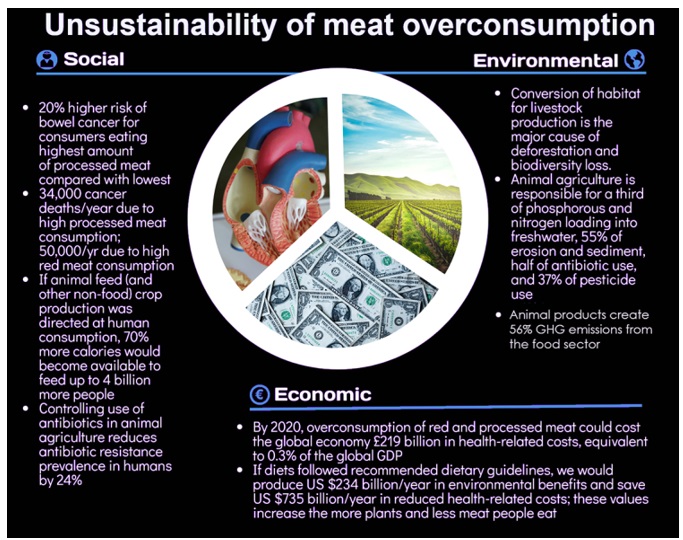
Source: N. A. Rust, L. Ridding, C. Ward, B. Clark, L. Kehoe, M. Dora, M.J. Whittingham, P. McGowan, A. Chaudhary, C. J. Reynolds, C. Trivedy, N. West, How to transition to reduced-meat diets that benefit people and the planet,Science of The Total Environment, 718
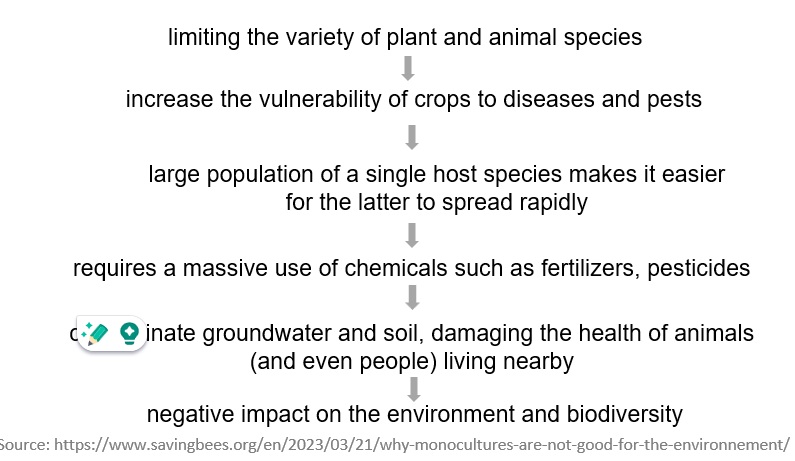
Reduction of monocultures
Reduction of
Monoculture farming means cultivating a single species of plant
on a large area of land to increase the production
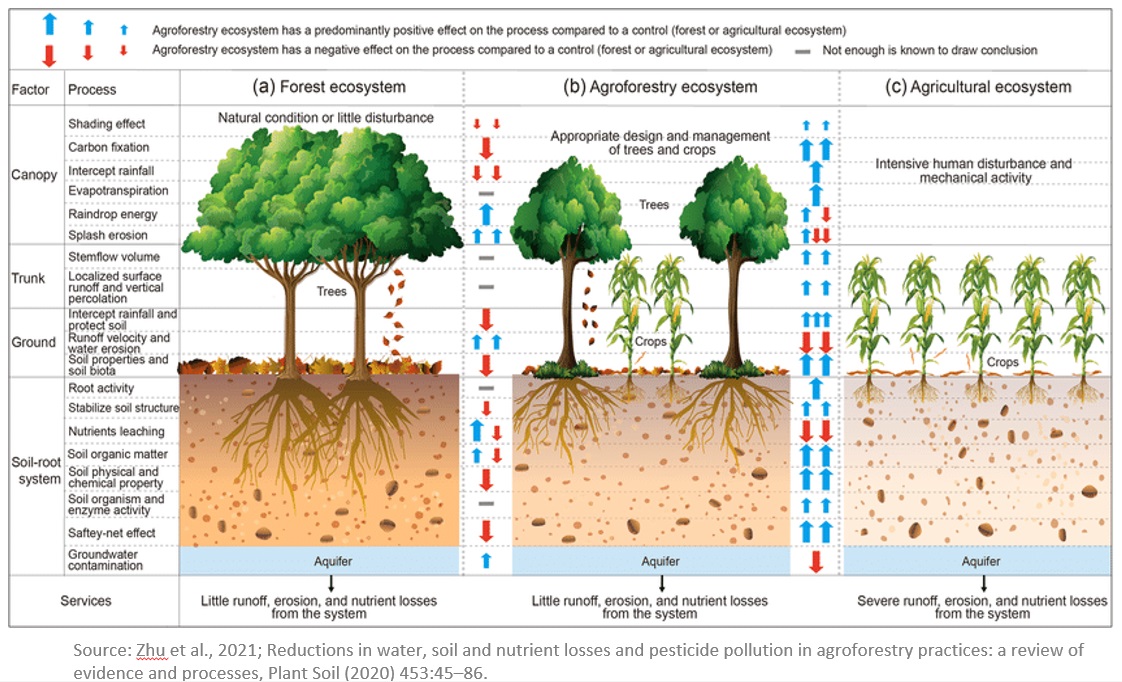
Agroforestry is a land use management
system that intentionally integrates trees
and shrubs with crops or pasture to create
environmental, economic, and social benefits.
It combines agricultural and forestry technologies.
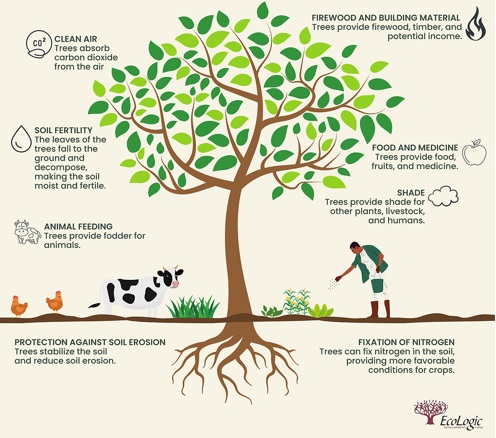
https://www.ecologic.org/post/agroforestry-what-it-is-and-why-it-is-essential-for-sustainable-and-climate-smart-use-of-land