Case studies
This section provides examples outlining various low-emission strategies adopted by companies like Danone, Ziołowy Zakątek, and Tetra Pak. Danone is focused on achieving net-zero carbon emissions by supporting decarbonization and improving food and water cycles through renewable energy, regenerative agriculture, and soil health. Ziołowy Zakątek, an agritourism farm in Poland, practices low-emission farming with organic methods, biodiversity conservation, and eco-friendly animal housing. Tetra Pak, a packaging leader, aims for net-zero emissions by 2050, prioritizing energy efficiency, renewable energy, recyclable packaging, and supply chain collaboration. Together, these initiatives highlight innovative approaches to sustainability, aiming to reduce environmental impact and promote healthier ecosystems.
Case studies
DANONE
Danone is a manufacturer and producer of dairy and nutrition products. The company offers fresh dairy products, bottled water, baby nutrition and medical nutrition products.
The company sells its products under the Danone, Activia, Evian, Volvic, Aqua, Gallia, Actimel, Nutricia and Bledina brands. It distributes its products through retail chains, traditional outlets and specialised distribution channels, including hospitals, clinics and pharmacies.
The company's operations span the Americas, the Middle East, Africa, Europe and the Asia-Pacific region. Danone is headquartered in Paris, Ile-de-France, France.
Source: Global Data, Danone SA: Overview, https://www.globaldata.com/company-profile/danone-sa/
Source: Danone, About Danone, https://www.danone.com/about-danone/we-are-danone.html#MISSION
TARGET ZERO NET CARBON EMISSIONS
Healthy food and the water cycle are significantly linked to the climate, which in turn depends on carbon levels in the atmosphere and oceans. 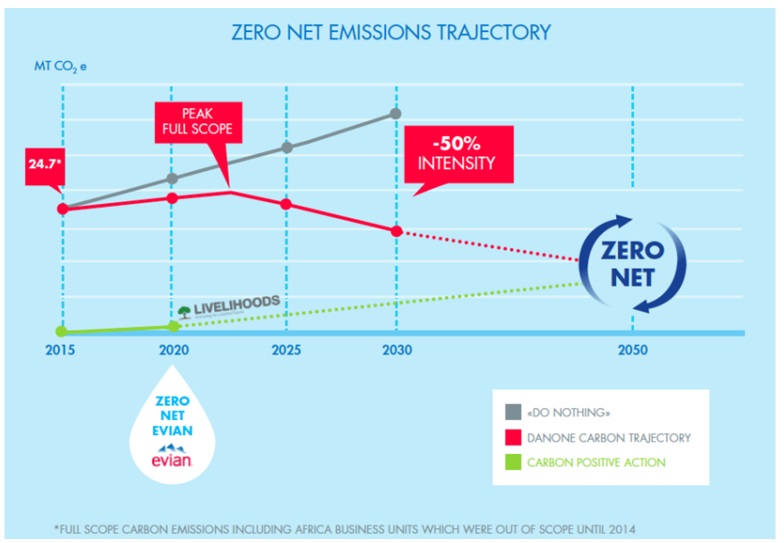
Danone's ambition is to set a trajectory for reducing greenhouse gas emissions in line with scientific guidelines, aiming to keep temperature increases below 2°C and to support the decarbonisation of the economy. According to the latest UN report on the 'emissions gap', Danone's main goal is to achieve net zero emissions in all emissions areas.
Source: Danone, Climate Policy, https://www.danone.com/content/dam/corp/global/danonecom/about-us-impact/policies-and-commitments/en/2016/2016_05_18_ClimatePolicyFullVersion.pdf
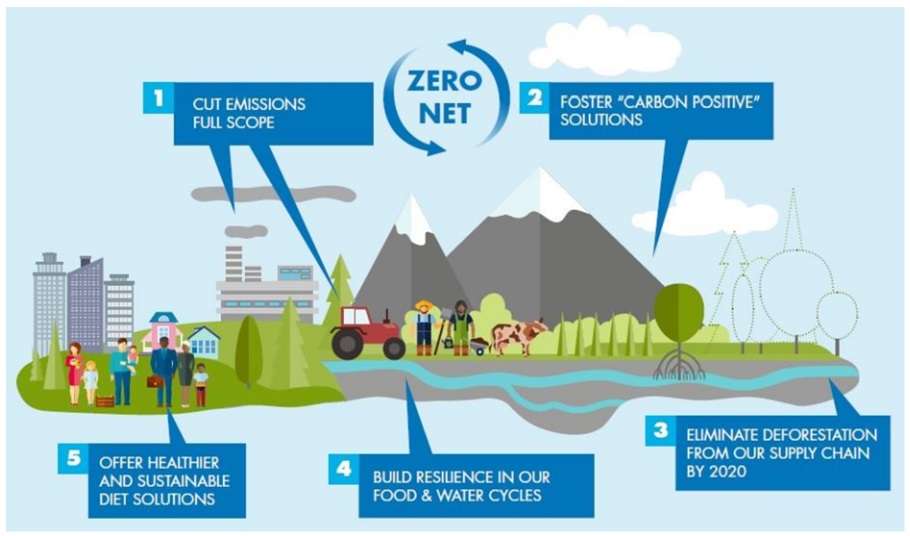
Danone’s ambition is to:
-
Take action on mitigation and contribute to sequestering carbon in soils, forests and ecosystems for “net positive” impacts to combat climate change,
-
Take action on adaptation, building resilient food and water cycles,
-
Be at the forefront of business solutions with healthier diet options for more people with less carbon.
Source: Danone, Climate Policy, https://www.danone.com/content/dam/corp/global/danonecom/about-us-impact/policies-and-commitments/en/2016/2016_05_18_ClimatePolicyFullVersion.pdf
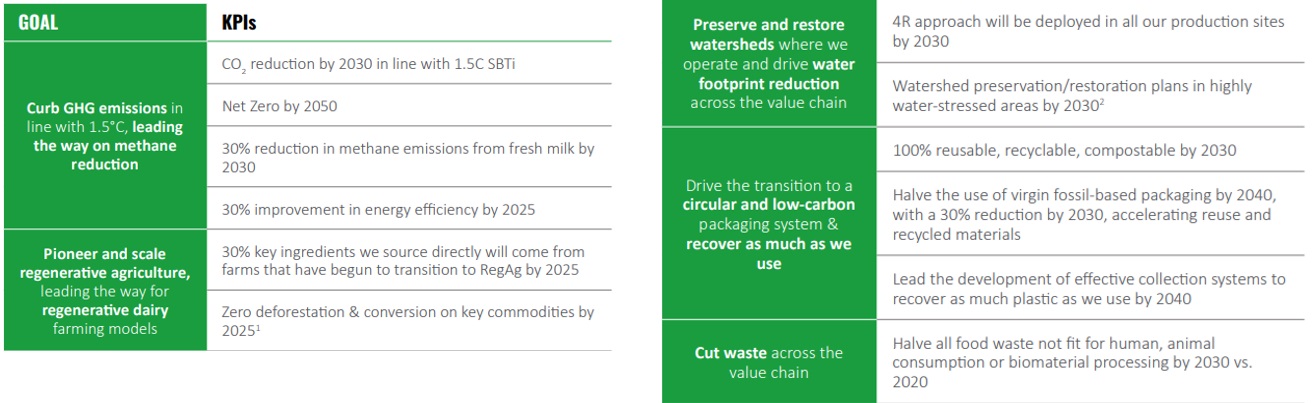
Danone has developed the following goals and KPIs:
Source: Danone, Danone integrated annual report 2022, https://www.danone.com/content/dam/corp/global/danonecom/rai/2022/danone-integrated-annual-report-2022.pdf
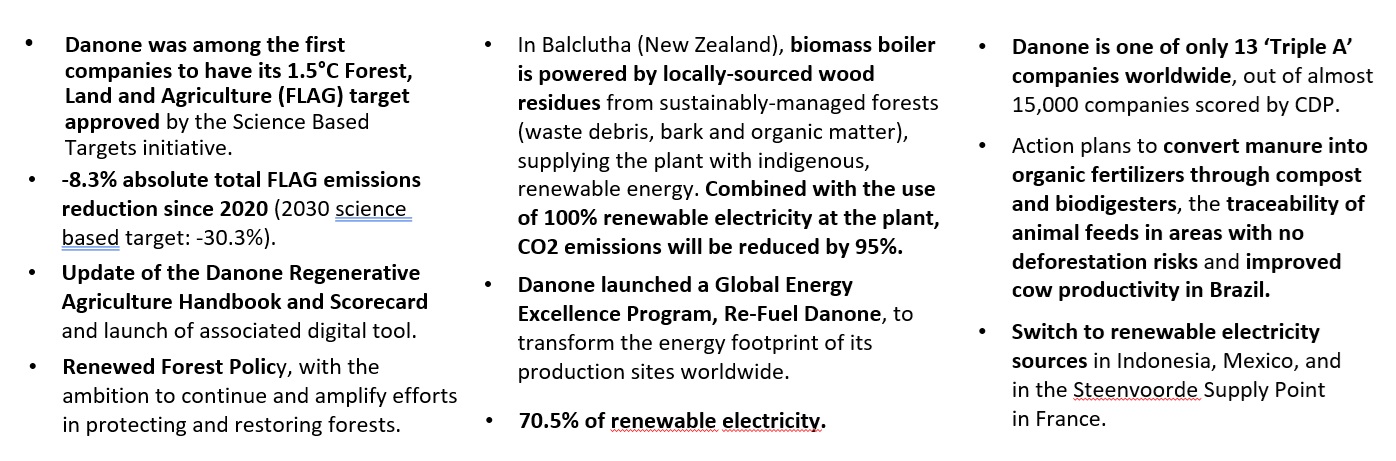
Source: Danone, Danone integrated annual report 2022, https://www.danone.com/content/dam/corp/global/danonecom/rai/2022/danone-integrated-annual-report-2022.pdf
Danone is collaborating with several partners to enhance global comprehension of how agricultural practices can contribute to nurturing and safeguarding soil health.
Source: Danone, Regenerative agriculture, https://www.danone.com/impact/planet/regenerative-agriculture.html
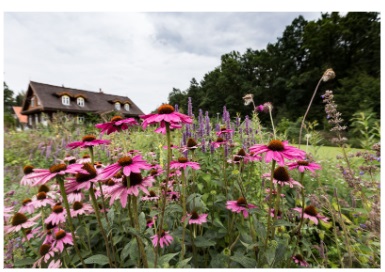
„Ziołowy zakątek” agritourism farm
The agritourism farm is located in the heart of the cleanest region of Poland - Podlasie.
On an area of almost 20 hectares, it brings together the rich culture and tradition of this area. You can find here buildings typical of the region, handicrafts and, above all, herbs.
An integral element of the herbal and botanical activities carried out is the Dary Natury company, which was established almost 30 years ago.
There is a Nature Education Center at the farm. The purpose of the center is to provide knowledge about the organic food, herbal traditions and sustainable development.
The farm uses traditional, low-emission agricultural practices.
Source: provided by Ziołowy Zakątek
Low-emission practices in crop production
-
vegetables are grown organically in a traditional way
-
herbs are collected from nearby forests and fields
-
cultivation of melliferous plants as part of maintaining biodiversity
-
use of organic fertilizers
-
exclusion from cultivation of areas that are constantly wet,
-
covering the soil with vegetation throughout the year - catch crops in crop rotation
The results: high food quality, maintaining biodiversity, reducing greenhouse gas emissions
Low-emission animal housing systems - care for animal welfare
-
cows grazing on the pasture (from spring to autumn) - ammonia reduction
-
hay feeding in winter
-
animal feed with the addition of herbal mixtures (health-promoting activities)
-
precise balancing of the food dose
-
free-stall animal housing system
-
poultry is free-range
Tetra Pak
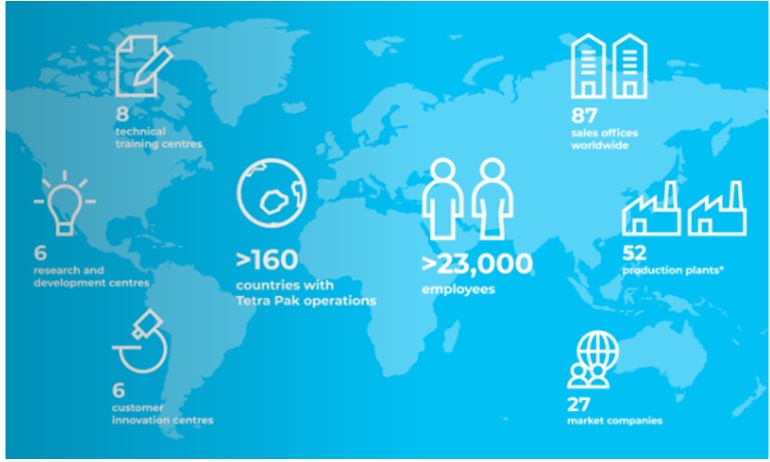
The company is the world's leading provider of food processing and packaging solutions. Working closely with customers and suppliers, the company innovates to provide access to safe, nutritious food to hundreds of millions of people in more than 160 countries, while striving to reduce its environmental impact.
Founder: Ruben Rausing
Headquarters: Pully, Switzerland
Number of employees: >23 000
Founding: 1951, Lund, Sweden
Source: Tetra Pak, Who we are, https://www.tetrapak.com/en-pl/about-tetra-pak/who-we-are/company
Tetra Pak commits to net zero emissions
Tetra Pak was founded on the idea that a package should save more than it costs, with sustainability always at the core of how the company operates as a business. Since 1999, the company has been collecting data on energy use and greenhouse gas emissions from across the organisation on an annual basis, with its GHG accounts audited by an independent third party since 2013.
Tetra Pak is reaffirming its strategic commitment to promoting sustainability transformation by setting an ambition to achieve net zero emissions across its value chain by 2050. In support of this goal, the company has set an interim target for 2030 to achieve zero net carbon emissions from its own operations. In addition, the company has set emission reduction targets in line with 1.5°C, in line with the principles of the Science Based Targets (SBT) initiative.
Source: Tetra Pak, Tetra Pak commits to net zero emissions, https://www.tetrapak.com/en-pl/about-tetra-pak/news-and-events/newsarchive/tetra-pak-commits-to-net-zero-emissions
Tetra Pak aims to achieve net zero greenhouse gas emissions by 2030 and meet its 2050 targets by focusing on four key areas:
-
Lowering energy-related emissions through energy conservation, improvements in energy efficiency, installing on site solar photovoltaics (solar PV) and purchasing renewable Energy. The company has invested more than €16 million in energy efficiency since 2011, preventing a 23% increase in energy consumption. To date, around 2.7 MW of solar PV has been installed, enabling the delivery of low-carbon electricity and reducing operating costs. Tetra Pak has also increased its use of renewable electricity from 20% in 2014 to 69% in 2019.
-
Partnering with suppliers and other stakeholders along the value chain to significantly reduce carbon footprint. Tetra Pak is committed to working with suppliers to reduce greenhouse gas emissions at various stages of the supply chain. Together, they are setting ambitious renewable energy targets and increasing the use of renewable and recycled materials.
-
Accelerating the development of its low carbon circular packaging and equipment portfolio. The company is increasing its investment in sustainable innovation to meet targets for recyclable packaging and minimising its carbon footprint.
-
Developing sustainable recycling value chains. Tetra Pak works with customers, waste management companies and others to ensure that all beverage cartons can be recycled and that the zero ones are properly disposed of or recycled.
Source: Tetra Pak, Tetra Pak commits to net zero emissions, https://www.tetrapak.com/en-pl/about-tetra-pak/news-and-events/newsarchive/tetra-pak-commits-to-net-zero-emissions
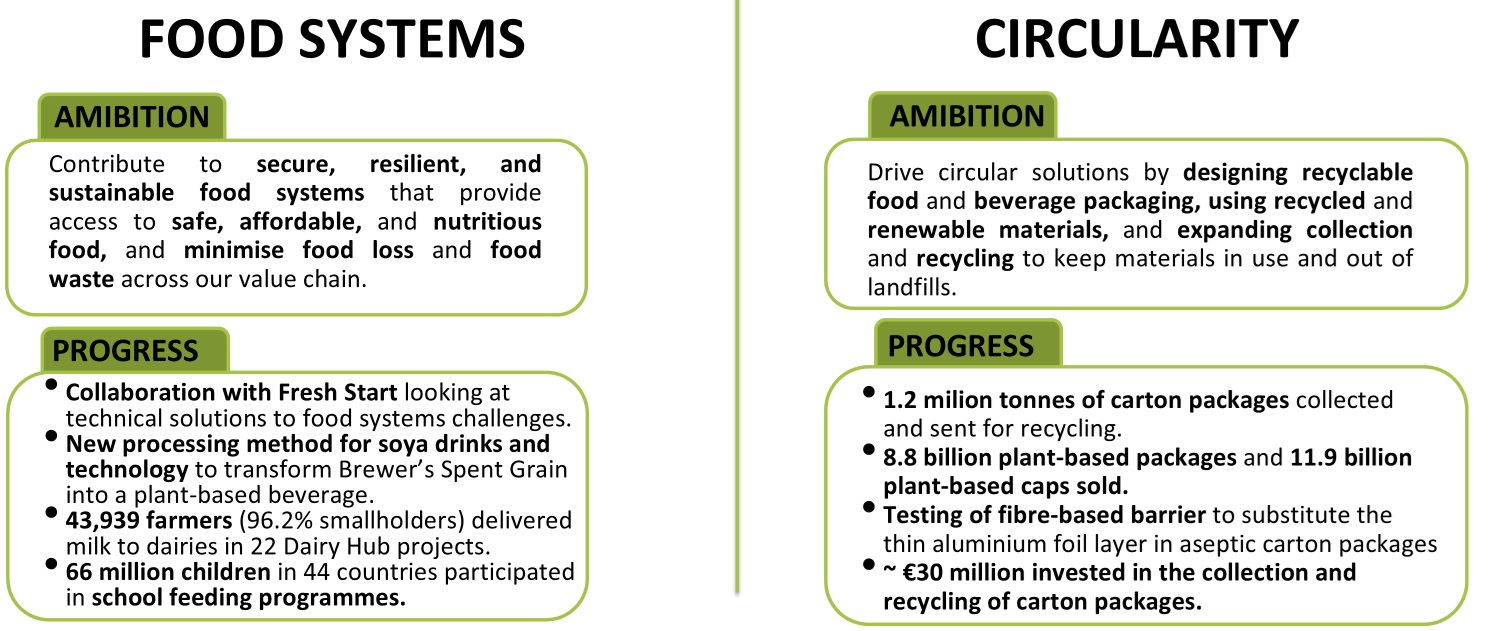
Source: Tetra Pak, Sustainability Report FY22 Highlights, https://www.tetrapak.com/content/dam/tetrapak/media-box/global/en/documents/sustainability-report-highlights-infographics.pdf
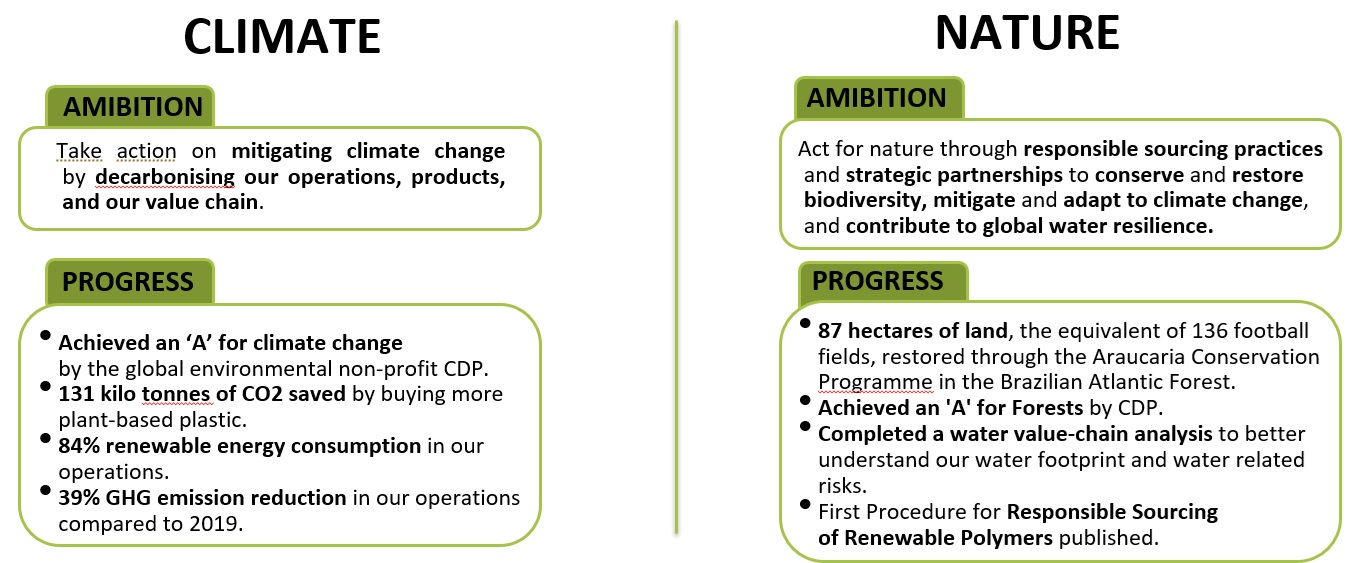
Source: Tetra Pak, Sustainability Report FY22 Highlights, https://www.tetrapak.com/content/dam/tetrapak/media-box/global/en/documents/sustainability-report-highlights-infographics.pdf